Multi-Currency Journal Entries, Ledgers, and Accounts - An Example (with a Multinational Organization)
Okay lets talk through an example.
Lets say we have tourist who is visiting the Canada and they get sick. Travel insurance only covers some of the cost, usually the patients needs to pay either the deductible or some differential amount. How does this amount get paid. I am going to assume in this example that we have a Brokerage FX firm in the middle and the patient is from India (to complicate things a little bit).
Do you know what makes India’s currency (INR) so complicated? You cannot hold onto the funds (in INR) for more than 24 hours. Secondly, to take money out of the country, you need the individual remitting the funds to have a PAN Number. Third, you probably need an agent to collect and remit payment when funds are leaving the country. Lastly, CAD/INR is not a direct conversion, usually you convert to USD first, meaning you are dinged twice.
When you are sending USD (out of India) the process is simpler because the agent (your partner locally) handles the conversion. I will admit, sending money back in INR is a whole other challenge because of the 24 hours rule. We will get into that in a separate conversation. With that being said, lets make a diagram to walk through the process of funds leaving India.
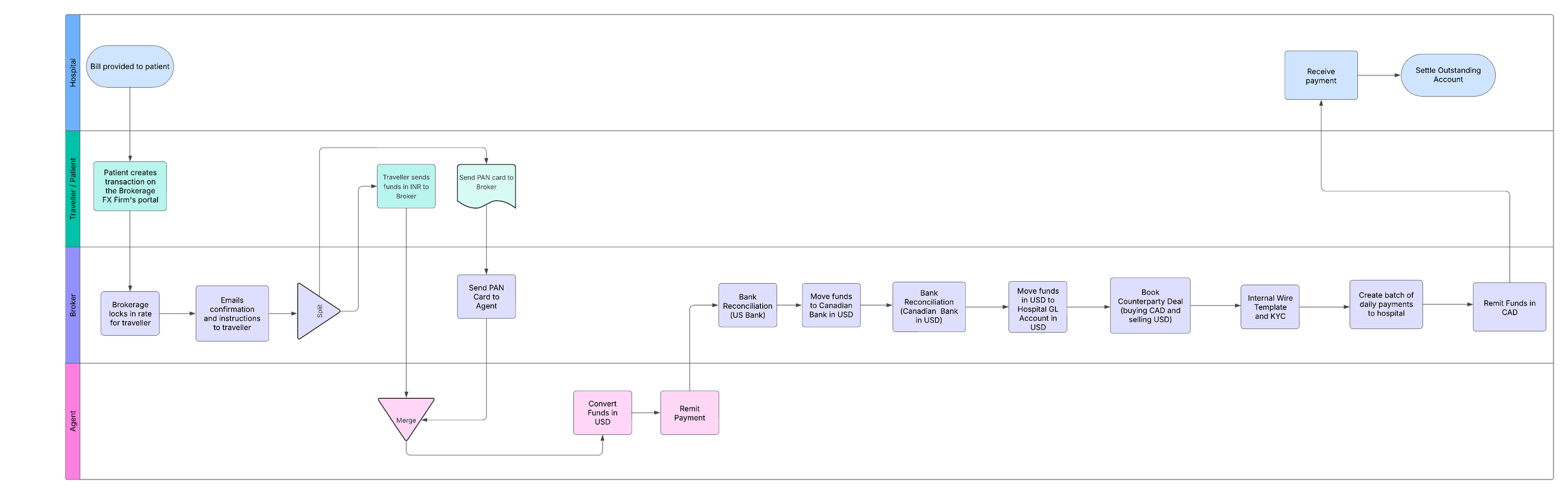
BPM of FX transaction - moving money from India to Canada
The process above shows the general flow of how money is moved from India to Canada. Keep in mind we have not talked about integrations between the “hospital and brokerage,” processes between the agent and brokerage, KYC, Wire Templates, Bank Reconciliation, Remittance, and FINTRAC. These are all topics to come in subsequent posts. As you can imagine, its not as simple as it seems.
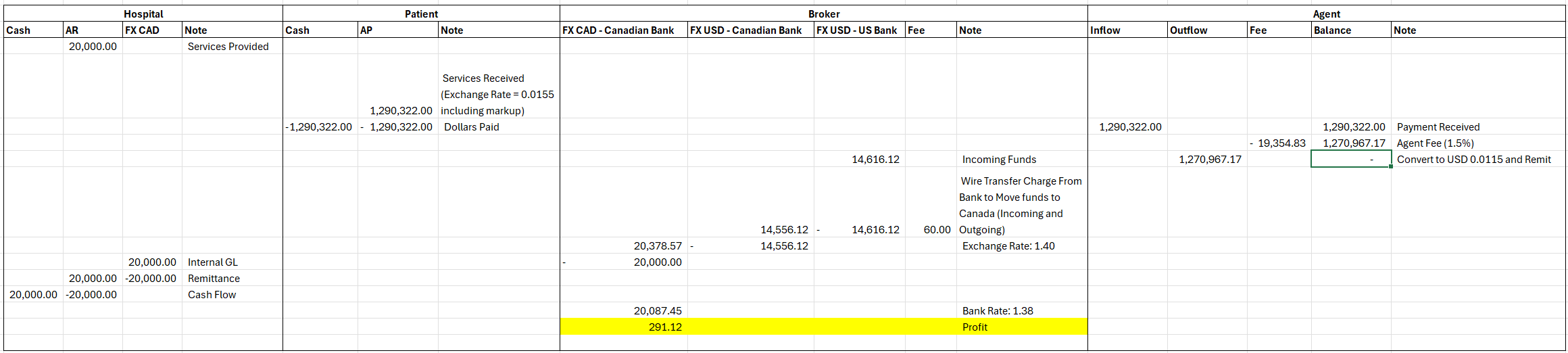
An example based on the flow chart above, how FX transactions are moved.